
Air Fryer Liners vs Parchment: When — and How — to Use Them
If you make any purchases through the links on this site, please know that as an Amazon Associate I earn from qualifying purchases. This costs you nothing extra.
Get free email updates with every new post or recipe! Sign up here.
Do You Need Parchment Paper or Liners in an Air Fryer?
Wondering whether to line your air fryer basket with parchment paper or disposable liners? It’s a common question for busy home cooks who want easy cleanup without sacrificing crispness. This article breaks down the differences, safety concerns, and practical tips so you can decide with confidence.
We’ll compare what parchment and liners are, explain heat limits and airflow issues, and offer food-by-food guidance. You’ll also get step-by-step instructions for safe use and ideas for reusable alternatives. Read on to learn when a liner helps — and when it only gets in the way of perfect results. By the end, you’ll know exactly when to use each option safely.


Parchment Paper vs. Liners: What They Are and How They Differ
What each product is (and how it’s made)
Parchment paper is a single‑use, cellulose (wood‑pulp) paper that’s been treated—typically with silicone or sulfuric acid—so it’s nonstick and heat‑resistant. Oven parchment is sold in rolls or pre‑cut circles; air‑fryer parchment sheets are usually pre‑cut rounds sized for baskets and often perforated to let hot air circulate.
Reusable air fryer liners are most commonly silicone: molded mats or baskets with raised patterns or holes. Silicone is produced from polymerized silicon and treated for food safety; good quality silicone withstands repeated heating and cleaning without losing flexibility.
What they do in the basket
Both types serve three basic roles: create a nonstick surface, catch drips and crumbs for faster cleanup, and help prevent delicate foods from falling through the grate. But they interact with heat and airflow differently—so performance varies by task.
Quick pros and cons comparison
Real-world tip: cooks who line a basket with a flat silicone mat often notice less browning on fries because the mat blocks direct air contact. Perforated parchment or a raised‑ring silicone mat gives crispier results.
Next up: how heat limits, airflow, and placement determine whether a liner helps—or hurts—your air‑fried food.
Safety, Heat Limits, and Airflow: What to Know Before You Use Them
Temperature limits and flame risk
Parchment paper is typically rated to about 420–450°F (215–232°C). Disposable air‑fryer parchment often lists a top temp in that range on the package. High‑quality silicone liners commonly tolerate 450–500°F (232–260°C), and some brands state even higher.
That said, paper in a hot, fan‑driven appliance can be dangerous if it becomes loose and contacts the heating element. Home cooks report sheets fluttering up during preheat and smoldering or igniting when they touch the element. Treat paper like any combustible material: check the package temperature rating and never let it float free.
Airflow matters: perforations, placement, and crisping
Air fryers cook by circulating very hot air; anything that blocks that flow will slow cooking and reduce crisping. To maintain even browning:
A quick real‑world example: a reader who used a flat silicone sheet under fries found they came out limp—swapping to a raised‑ring silicone mat or a perforated parchment fixed the problem.
Manufacturer guidance and common smoke causes
Many major air‑fryer manuals (Ninja, Philips, Instant Vortex, etc.) explicitly recommend against placing loose paper in the basket or preheating with a liner in place. If your manual forbids liners, follow it—warranty and safety reasons matter.
Frequent causes of smoke in air fryers:
Practical safety checklist
With these safety rules in place, you’ll be ready to choose the right liner for each food—next, we’ll walk through which foods and tasks benefit most from parchment or silicone.
When to Use Parchment or Liners: Food-by-Food and Task-by-Task Guidance
Delicate baked goods and sticky treats
Use parchment or pre-cut liners for delicate items that you don’t want to break or stick: muffins, petit fours, small cakes, and bars. Parchment prevents soggy bottoms and makes it easy to lift out finished pieces. For tiny, fragile cookies or cheesecakes, a parchment circle or cup holds shape and speeds cleanup.
Sticky, glazed, and heavily sauced foods
When sauces or sugary glazes are involved (honey‑garlic wings, BBQ ribs, glazed salmon), a liner protects the basket from burnt-on gunk. Choose perforated liners for airflow; for very saucy items, a non‑perforated sheet under a rack can catch drips without blocking the air that crisps the top.
Very fatty, crumbly, or breaded items
Breaded chicken, fish fillets, and foods that shed crumbs benefit from a liner to contain mess. Silicone mats with raised rings are good if you want some air movement while preventing grease from pooling. If you expect lots of fat (bacon or high‑fat cuts), set a tray or liner under a rack to collect drips rather than lining the cooking surface directly.
Batch cooking and fast cleanup
If you’re doing multiple batches—finger foods for a party or reheating a week of meal‑prep sides—disposable pre‑cut liners speed turnover and reduce washing. For heavy reuse, a reusable silicone liner (choose one with raised bumps) saves money and still allows airflow.
When not to use them
Special cases: reheating, steaming, and rack placement
Next up: step‑by‑step best practices for installing liners safely and getting the crisp results you want.
How to Use Parchment and Liners Properly: Step-by-Step Best Practices
Selecting and preparing the right liner
Measure your basket diameter (a quick tape measure or ruler works). Smaller 3–4‑qt fryers often use ~8″ circles; popular 5.8–6‑qt models (Cosori, Ninja Foodi) need 9–10″ rings. Always buy or cut liners to fit the basket so they don’t cover vents.

Installing the liner: do this every time
- Place the liner flat in a cold basket.
- Put the food directly on top of the liner—never run the fryer empty with a loose liner inside.
- If the recipe calls for preheating, preheat the empty basket, then add the liner with food after the preheat cycle finishes.
Anchoring techniques to prevent movement
Dealing with sauces, grease, and smoke
Timing: when to add or remove a liner mid‑cook
Quick troubleshooting and fixes
These simple steps keep liners working for you—cleaner baskets, less mess, and better final texture.
Choosing, Caring for, and Alternatives to Liners and Parchment
How to choose quality products
Look for clear temperature ratings (e.g., 430°F/220°C) stamped on packaging, an explicit “food‑grade” or FDA/USDA‑compliant label, and instructions that mention air fryers or ovens. Perforation patterns matter: evenly spaced, small holes preserve airflow; large or clustered holes can concentrate heat and cause uneven cooking. If a product lists “for air fryer” but has no temp rating, treat it with caution.
This is a good time to pick up reliable single‑use sheets for everyday use:
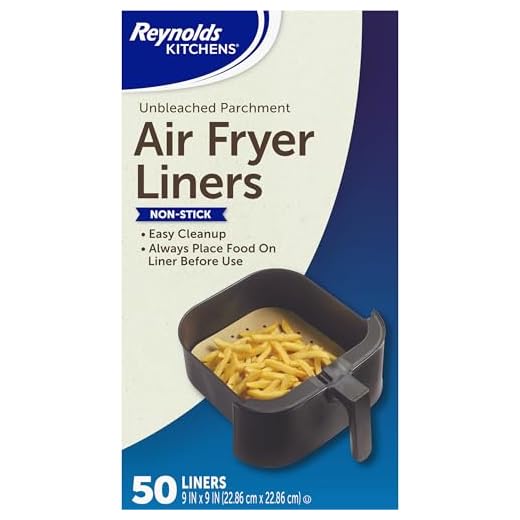
Single‑use vs. reusable: cost, waste, and performance
Caring for reusable liners and storing parchment
Eco tips and practical alternatives
Next, we’ll pull these choices into practical takeaways so you can pick the right liner for each cooking task.
Practical Takeaways: Use the Right Liner for the Job
Know your material limits and follow temperature ratings, and never block airflow. Use perforated or fitted liners when you want convenience and even cooking; choose single‑use parchment for easy cleanup or durable reusable liners if you air fry frequently and prefer less waste. Match liner type to task and food.
Most important: always place food on top of the liner and never leave loose paper in a hot air fryer — it’s a fire and airflow hazard. Try a perforated sheet and adjust your choice to cooking habits and personal environmental priorities.

Really appreciated the ‘food-by-food’ breakdown. Super practical.
I have a tiny air fryer and I worry about airflow when using liners. The article said never use a loose sheet because it can fly up — had that happen once and it nearly touched the heating element (scary!).
I bought the 200-Pack 8.5-inch Perforated Parchment Liners and they helped, BUT: the perforations on some cheap packs are way too small, so airflow still feels limited. Anyone else notice big quality differences between brands? Also — any tips on safely anchoring liners without poking holes that defeat the purpose?
Totally — I switched to the 150-Pack 8-inch Unbleached liners and noticed better perforation than a cheaper brand I tried. Also, scissors to trim the liner to the basket shape is underrated.
Quick add: never let paper or parchment hang above the basket rim. If it touches the element, remove it immediately. Good you had no damage!
Thanks everyone — trimming + weight trick sounds perfect. Will try the 150-pack next.
I’ve had mixed luck. Cheap packs = tiny holes. Pay a bit more for perforated sheets with larger holes and it’s a night-and-day difference.
Yes — quality/perforation size varies. Look for liners labeled ‘perforated for air fryers’ and check reviews that mention hole size. To anchor them: place food on top right after adding the liner (weights it down). Avoid poking holes that go too deep; shallow slits at edge sometimes help but can tear. Silicone liners like Boribim are safer for anchoring because they stay flat.
If the liner still lifts, try clipping a small bit of foil weight (wrapped) at the center under the food — works in a pinch. Not the prettiest but safe if done carefully.
Neutral take: liners are handy but not always necessary. I rotate between Reynolds 9×9 for big bakes, 125-Pack 8-inch for cookies, and silicone for messy things. Saves time on washing.
Couple of things I wish the article covered more: how different coatings on frozen foods react with liners, and whether any of these papers affect browning. Still a very useful guide though.
Noted — we’ll add a small section about finish-cooking tips in an update.
Re: coatings — sugary glazes can stick more to parchment, so keep an eye and remove earlier. Silicone helps for sticky glazes.
Good feedback — we can do a follow-up on coatings and browning. Short answer: liners can slightly reduce direct browning when they create a barrier; perforated sheets minimize that effect. Coatings generally interact similarly regardless of liner, but oil pooling can happen more with silicone.
Thanks! Removing them near the end is a great hack, hadn’t tried that.
Agree on browning. I take liners out near the end and broil (if your air fryer allows) for final crisping.
Practical question: the article mentioned reusable silicone vs disposable parchment. What’s the environmental trade-off in reality? Are silicone liners long-lasting enough to justify production footprint vs single-use parchment? I want to be eco-smart but also practical.
I’m leaning towards Boribim silicone since it lasts and cuts down on trash, but worried about microplastics or quality over time.
If composting is available in your area, unbleached parchment is a decent single-use compromise. Otherwise, silicone is worth it.
Thanks all — this helps. I’ll keep the silicone and compost smaller parchment scraps when I use them.
Good question. Generally: silicone has higher upfront environmental cost but long lifespan reduces per-use impact. Food-grade silicone doesn’t shed microplastics like some plastics, but avoid cheap silicone blends. If you use a silicone liner hundreds of times, it can be greener than disposable parchment. Also consider compostable unbleached parchment if you want single-use but lower impact.
I’ve used Boribim for two years with zero issues. Washes easily and no odor. Feels like a win for me.
I’ve been buying 200-Pack 8.5-inch Perforated ones in bulk for parties — they save so much cleanup time. The perforation pattern matters though; I keep one brand that consistently has big holes for airflow. That said, if I want ultimate crisp, I skip liners entirely.
FYI: check measurement labeling. Some 8-inch liners are actually 8.5″ when stretched — measure your basket first.
Short and sweet: if you’re air-frying frozen stuff, you can skip liners most of the time. They usually already come with batter/coating to prevent sticking. Lined baskets = extra expense and waste for me.
Great article — cleared up a lot for me. I’ve been using the Boribim Square Silicone liners for veggies and they’re fantastic for cleanup, but do they actually change crispiness compared to perforated parchment? Tried a batch of fries and they seemed slightly less crisp.
Any tips on getting max crisp with silicone?
I had the same issue — short solution was to remove the liner for fries and use it for sticky stuff. Silicone = convenience, parchment perforated = crunch.
Silicone can reduce direct airflow contact a bit, which can slightly affect crispness. Try: 1) preheating the fryer with the silicone liner in place, 2) leaving small gaps for airflow, and 3) flipping/stirring halfway. For fries, perforated parchment or no liner usually gives the crispiest result.
I tried the 150-Pack 8-inch Unbleached liners and they were great for fish (less sticking). One tiny gripe: they can tear when you try to fish out delicate fillets. Anyone else? Any trick to lifting fragile foods without tearing the paper?
Good tip, thanks — will try the spatula trick next time.
I wet the spatula tip slightly so it slides easier under the fish. Works for me!
For delicate fish: slide a spatula under the fish to lift it, or place a piece of parchment plus a thin metal spatula under the fish before cooking so you can lift it out. You can also use a silicone liner for sticky but fragile items — it’s more forgiving when removing food.
I use a piece of foil under the parchment for extra support when cooking fillets. Just don’t let the foil touch the heating element.
If it keeps tearing, try two layers of parchment with offset seams — more stable.
Love that you compared so many liner types. The section about heat limits was super helpful — I was about to try Reynolds 9×9 unbleached liners at 425°F because I misread packaging. Whoops.
Question: what’s your go-to for baking small pastries in the air fryer? The SMARTAKE pre-cut sheets seem tempting for cookies, but I’m worried about trimming and fit. Would 125-Pack 8-inch disposable sheets be better?
For small pastries/cookies: pre-cut sheets like SMARTAKE are great if you can trim them to fit the basket. The 125-pack 8-inch sheets are usually easier for round baskets, but check your fryer diameter first. If your fryer has lots of circulating air, use perforated parchment sparingly and make sure it sits under the food (not loose).
I use the 125-pack 8-inch for mini tarts — I just press them into the basket and trim the corners with kitchen scissors. Works fine and cleanup is a breeze.